Never change a winning team!
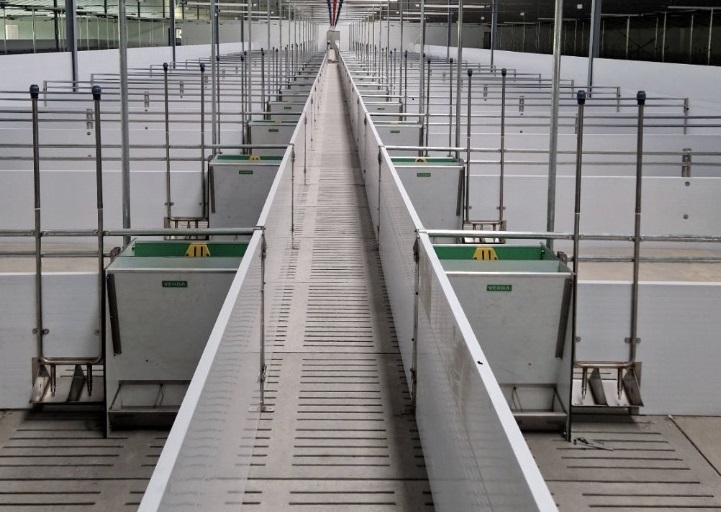
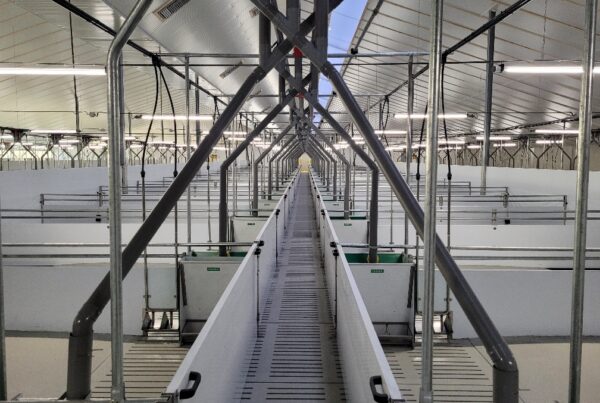
Never change a winning team! That’s exactly how we feel about the implementation of our pig feed troughs. It’s taken a fair bit of blood, sweat and tears over more than 50 years, but we’ve learnt the hard way. Whenever we received valid feedback or warranty claims, we immediately adapted our feed trough design accordingly. But ultimately, when you have a top-quality product – a ‘winning team’ – you have to maintain that standard. And that’s why our VERBA pig dry feed troughs have remained unchanged since 2010. Simply because, over the years, we’ve incorporated all the solutions and feedback into the design, and the value for money is optimal. Making changes increases the risk of complaints; a more expensive pig feeder is excessive and a waste of money.
We offer a 7-year guarantee on our dry feed troughs for pigs, which means we remain directly involved in ensuring the required quality for much longer. You won’t find that with any other feed trough supplier!
In this article, we explain a few things about some deliberately chosen details.
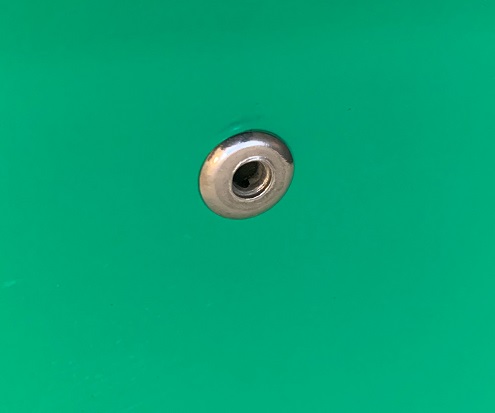
Pop rivets or bolts and nuts?
In 97 per cent of our deliveries, we assemble our pig dry feed troughs using stainless steel pop rivets (the official term is ‘blind rivets’). The purchase price of stainless steel pop rivets is twice that of bolts and nuts. Investments in pneumatic equipment in the workshop (tools, air pipes and compressors) are also higher for setting pop rivets than for electric hand tools used to tighten bolts and nuts. On the other hand, assembly time is shorter when using pop rivets.
But these are not the real reasons why we mainly fit dry feed troughs for pigs and piglets with stainless steel pop rivets. We always joke: are aeroplanes and cars also assembled with nuts and bolts? The answer is, of course: no. And there are two good reasons for this: vibrations and the coefficient of thermal expansion of materials.
Dry feed troughs for pigs are made from plastic sheet materials that are assembled using stainless steel corner profiles. These sheet materials and the stainless steel each have a different coefficient of thermal expansion. When temperatures fluctuate, stainless steel expands differently to the plastic sheet materials, which can cause the bolt-and-nut fastenings to come loose. A good stainless steel pop rivet, on the other hand, anchors itself completely into the plastic sheet material. This ensures that no gap forms between these two materials when they contract. In addition, pig feed troughs are subject to a great deal of vibration, seven days a week and almost all day long. Due to these movements caused by the pigs, bolts with lock nuts eventually vibrate loose, and this is exacerbated if the plastic sheet materials and stainless steel have shrunk. If the bolts and nuts are not regularly and consistently checked and retightened, the feed trough’s functionality and alignment will eventually be compromised. This is the real reason why we assemble our dry feed troughs for pigs using pop rivets, and only use bolts and nuts if our customers specifically request it. Because if the customer insists on it, we will of course do so (after first explaining the situation clearly).
Slide adjustment or spindle adjustment?
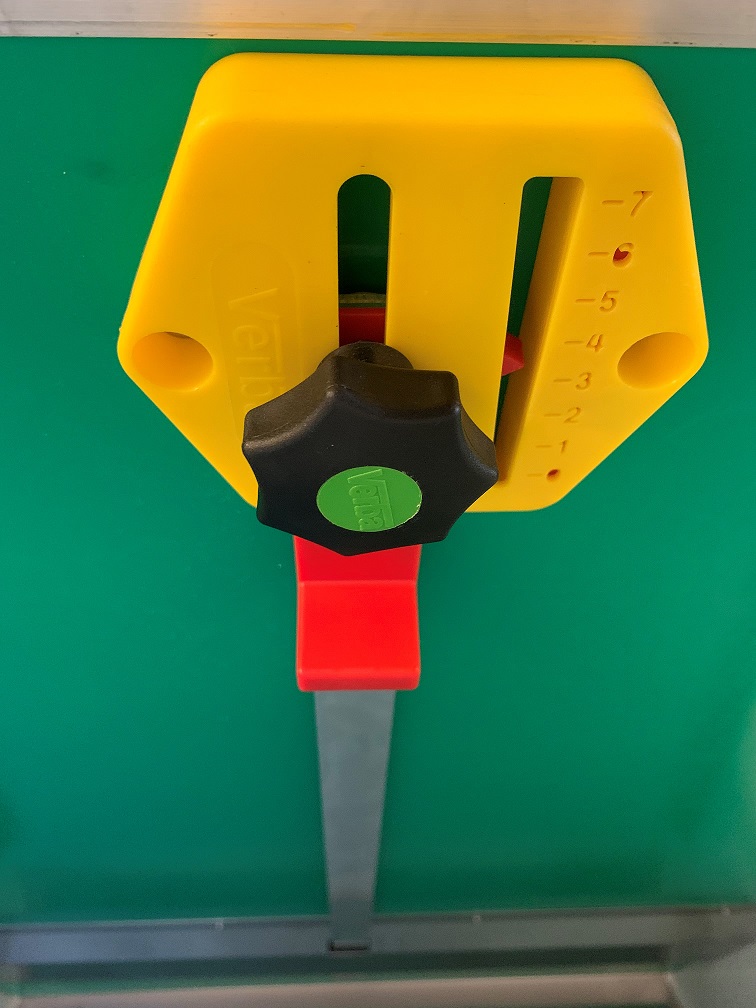
Both options are possible, but 95 per cent of our customers prefer a sliding adjustment mechanism. We can also produce a stainless steel spindle adjustment mechanism. But why do we – and most of our customers – actually opt for a sliding adjustment mechanism?
There’s only one answer to this: speed of adjustment. Speed and ease of work are hugely important in our society, because labour is scarce and expensive. We need to make the most of it.
The slide adjustment, just like a spindle adjustment, can be adjusted continuously, but adjusting a pig dry feed trough with a slide adjustment is many times quicker than with a spindle adjustment. Imagine the following scenario: you have a piggery with 120 double-sided dry feed troughs, each with two spindles on each side. You then have 240 lower slides to adjust using two spindles on each side. One spindle lowers or raises a lower slide by 1.25 mm per full 360-degree turn. The conclusion is that you have to turn the spindles an enormous number of times to adjust all the pigs’ feed troughs correctly. With a slide adjustment, you simply loosen the star knob and can use the handle to raise or lower the slide to any height you wish in a single movement. If there is feed trapped beneath the slide that you simply cannot get through, simply loosen the star knob; the slide will then lower automatically as the pigs eat. Shortly afterwards, use the slide adjustment to pull the lower slide to the desired height and secure it with the star knob. With a spindle mechanism, the force is such that if there is feed trapped beneath the feed slide that you cannot push through, you risk breaking the entire spindle mechanism or the slide itself if you simply carry on turning it relentlessly. You’ll want to avoid this, but unfortunately it does happen occasionally with spindle adjustments, as people are often under time pressure. If you’d still prefer a stainless steel spindle adjustment on your pig feed trough: no problem, we can make it!
A plastic under-shelf or a stainless steel under-shelf?
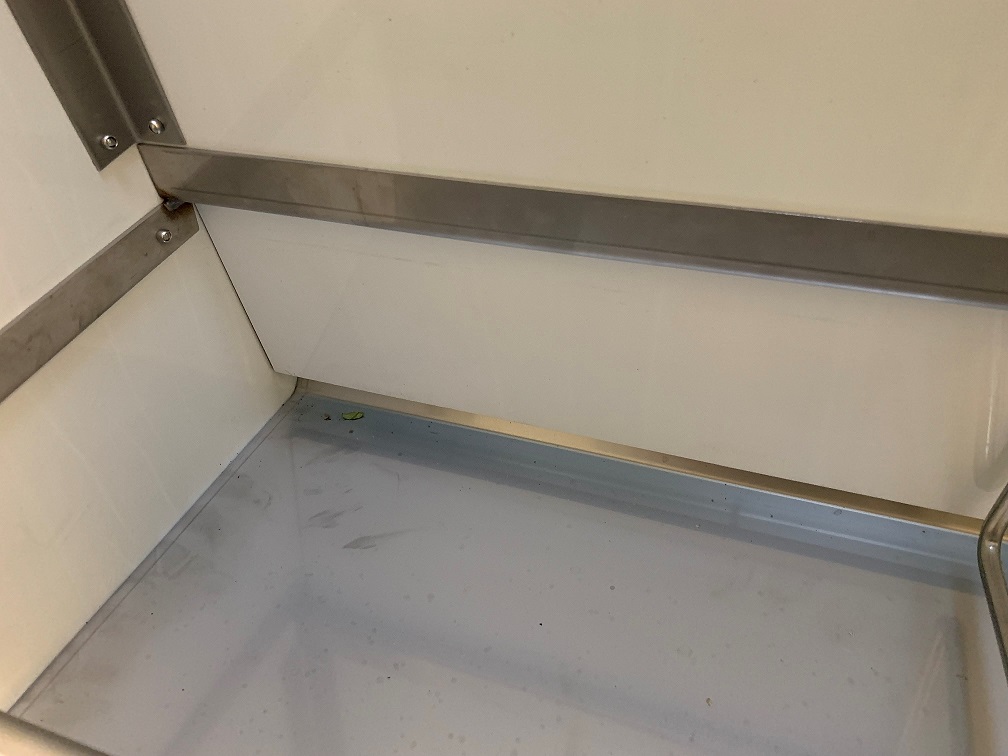
We supply both, but a stainless steel base tray carries an additional cost compared to the plastic base tray due to the higher material costs. In over 85 per cent of our sales, we supply dry feed troughs for pigs with a plastic under-slide. We ourselves prefer a plastic under-slide, and there are two reasons for this. Firstly, heat does not transfer through a plastic base tray, which prevents the feed from forming bridges. This is because when pigs are feeding from a trough at the same time, a fair amount of heat from their snouts is transferred to the base tray. If the environment is slightly colder or more humid, this body heat passes through the material of a 1.5 mm thick stainless steel feed slide, causing a considerable amount of condensation to form on the inside/feed side of the slide. This can cause the feed to form bridges, causing it to get stuck in the pigs’ feed troughs. With an 11 mm plastic slide, you are guaranteed not to experience this problem, not only because of the thickness of the material but also because plastic is a much better insulator than stainless steel. A second reason is the price. Plastic is more cost-effective than stainless steel.
Spill edge
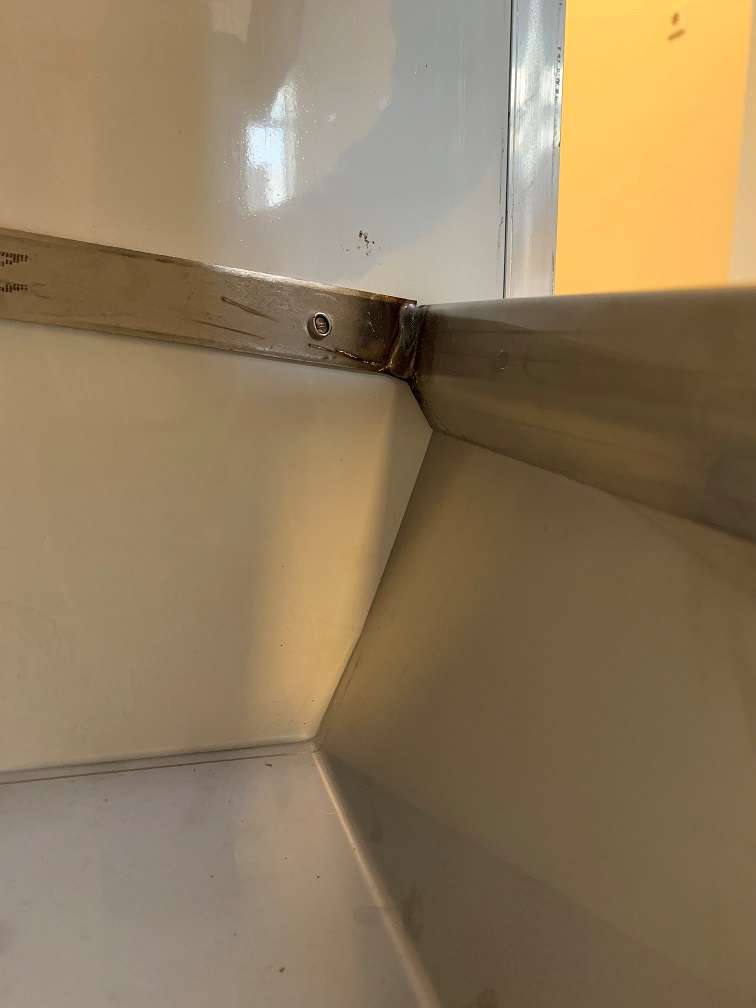
Over the years, we have developed our own anti-spill rim for dry feed troughs. These are absolutely essential for dry feed troughs for pigs, as pigs like to drink whilst eating. As there is no drinking nipple in a dry feed trough, the pigs tend to wander off whilst eating. The special anti-spill rim we have developed prevents feed spillage to a large extent. If you’re comparing dry feed troughs, first check whether they have an anti-spill rim at all. If they do, check whether the inside of the spill-proof rim fits 100% flush against the trough base. This prevents feed from getting trapped inside the rim, where it would rot and compromise hygiene. Furthermore, ear tags cannot get caught behind it, which is the case with an open anti-spill rim.
As an alternative to this anti-spill rim, we are very occasionally asked whether we could instead weld a round bar to the inside of the front of the trough across its entire width. We have done this on a number of occasions by special request. We are convinced that the standard anti-spill rim works better, but welding a round bar into place is also an option.
Open-plan or closed-plan office layouts?
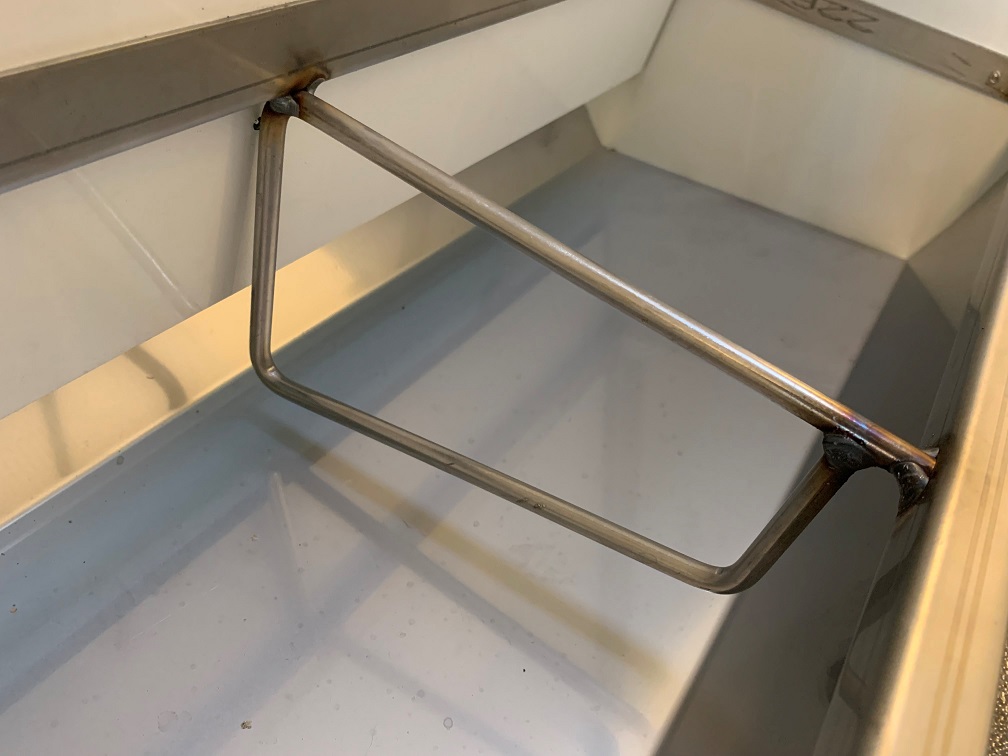
Our pig dry feed troughs are fitted with open partitioning between the feeding compartments. This applies to the SL feed troughs for piglets, which feature Ø 6 mm stainless steel round bars, and to the SM feed troughs for fattening pigs, which feature Ø 8 mm stainless steel round bars. The dividers are fitted with a lower bracket to prevent animals from becoming trapped. Thanks to these open dividers, pigs can clearly see each other eating – and seeing others eat encourages them to eat too. Furthermore, pigs do not like to put their heads into enclosed spaces, as they are, after all, flight animals. Furthermore, open partitioning has the advantage of being much easier to clean with a high-pressure washer. We can, however, also weld the partitions closed with a stainless steel plate if desired, but in our opinion this offers no advantages.
Should the feed trough at the front of the trough be left open or closed?
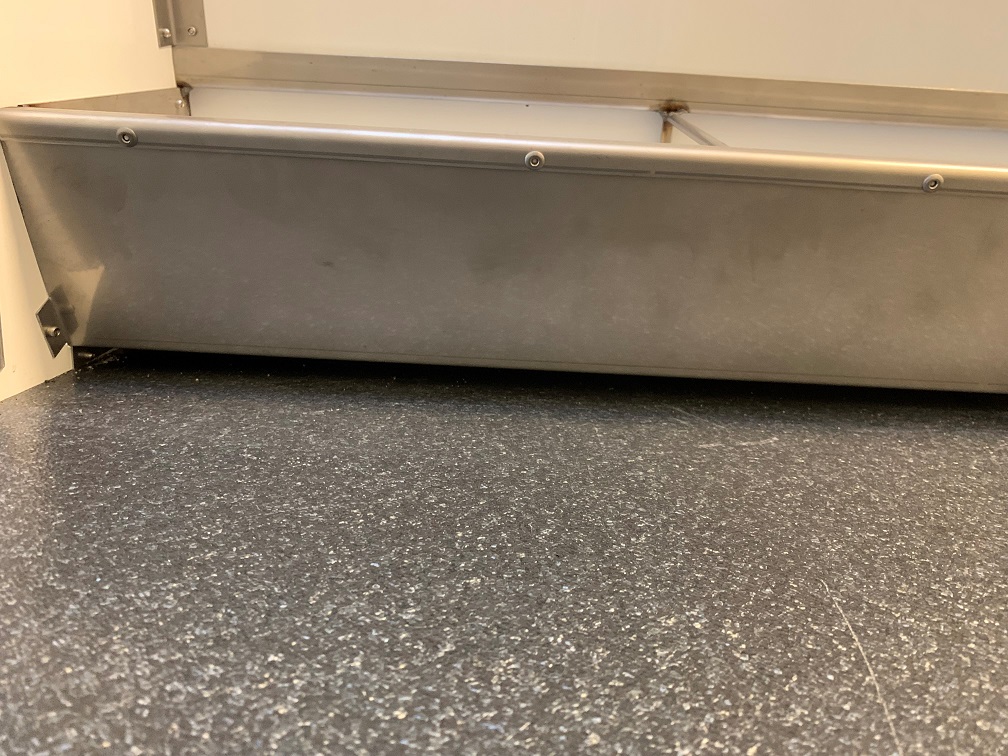
We leave the front of the feeding trough open and never close it. There are three reasons for this. Firstly, if the space between the bottom of the pig feed trough and the floor is open, you can see what’s lying there. If the front of the trough is closed and extends right down to the floor, you can’t see anything and can only guess what’s underneath. Secondly, with an open underside, you can spray underneath with a high-pressure washer should there actually be dirt or manure there. With the closed version, you cannot spray underneath, which significantly increases the risk of pests. Thirdly and finally: pitting corrosion. Stainless steel requires oxygen as a protective medium if the surface is damaged. This ensures that stainless steel is – and remains – truly rust-resistant. Oxygen protects the oxide layer of stainless steel and prevents it from rusting through. If there is no oxygen, stainless steel can simply rust through. Near the floor in a pigsty, the oxygen content is lower or non-existent (particularly if the manure is too high in the pit); furthermore, the environment in a pigsty at pit level is aggressive. If the front sides of the pig feeding trough are sealed and the stainless steel trough can only be ventilated from below, oxygen cannot reach it and the stainless steel trough can rust through quickly, despite being made of stainless steel.
Furthermore, with a piglet feeder, it is never a good idea to have a straight front edge on the trough. For a piglet that is still small and stands with its legs facing forwards, it is helpful if it can stand with its legs partially under the trough, which slopes inwards. This allows it to reach the feed in the trough easily whilst maintaining a natural posture. If the front is straight, the piglet has to stand further away from the trough and in an unnatural posture. This makes the feed less accessible, which in turn hinders growth.